Elastic mooring parallel to springs and breakwaters

Shock Absorber Cranks

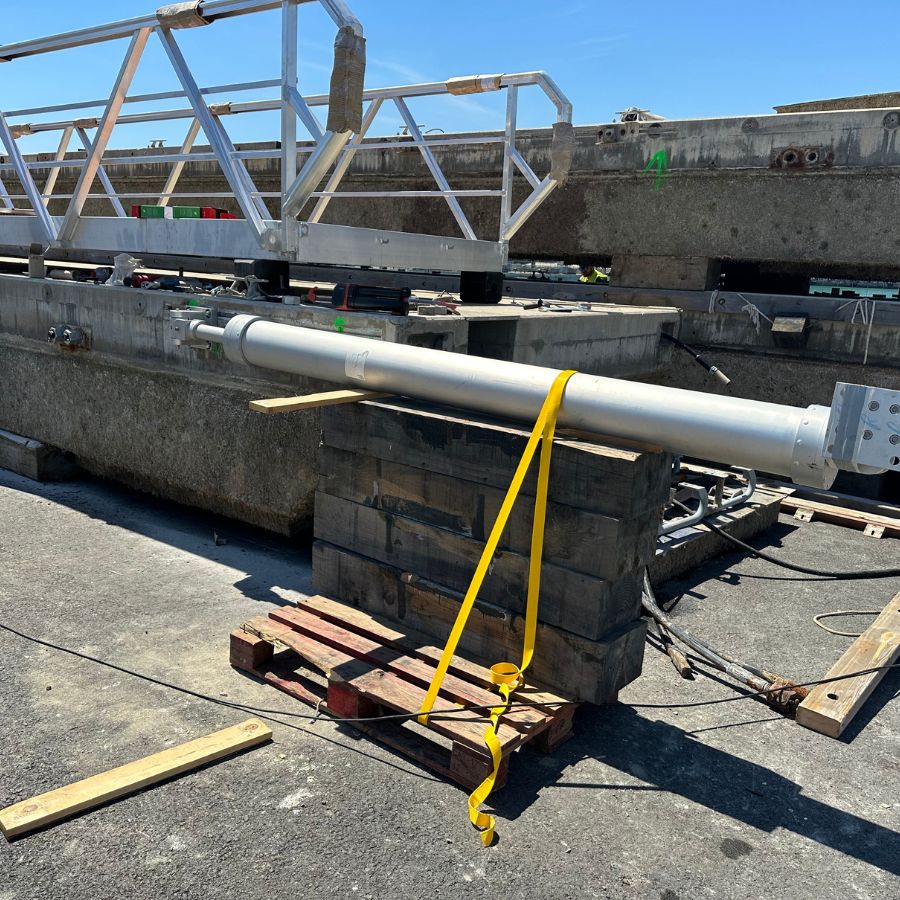
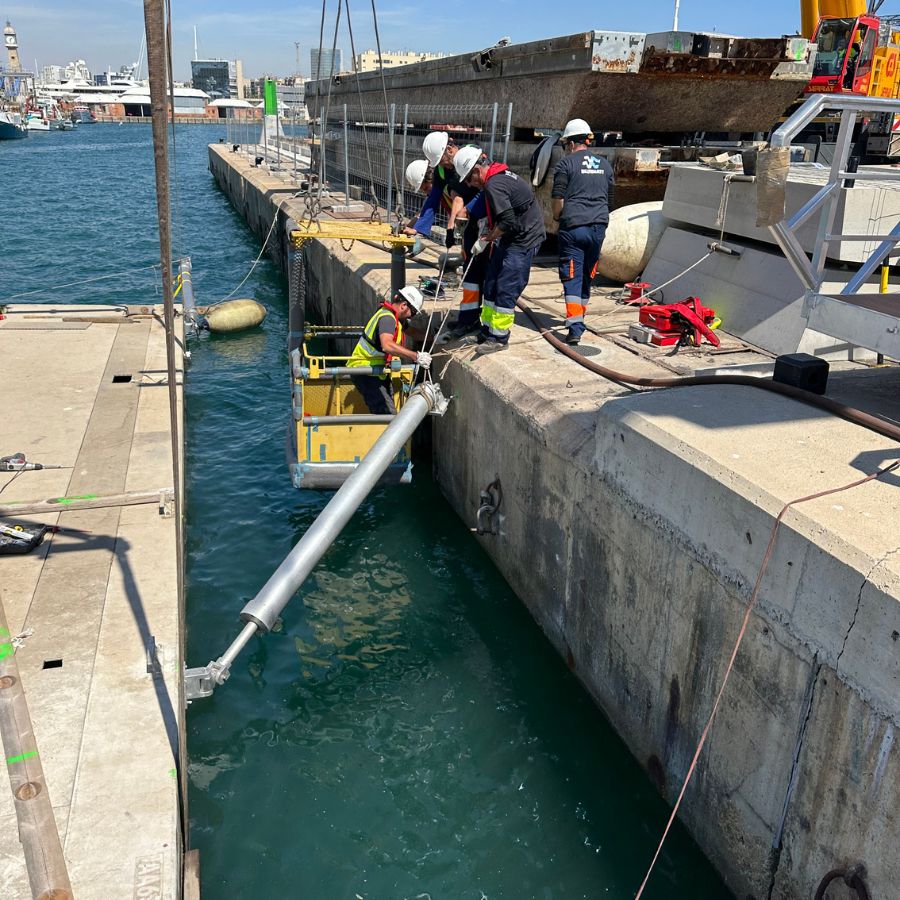
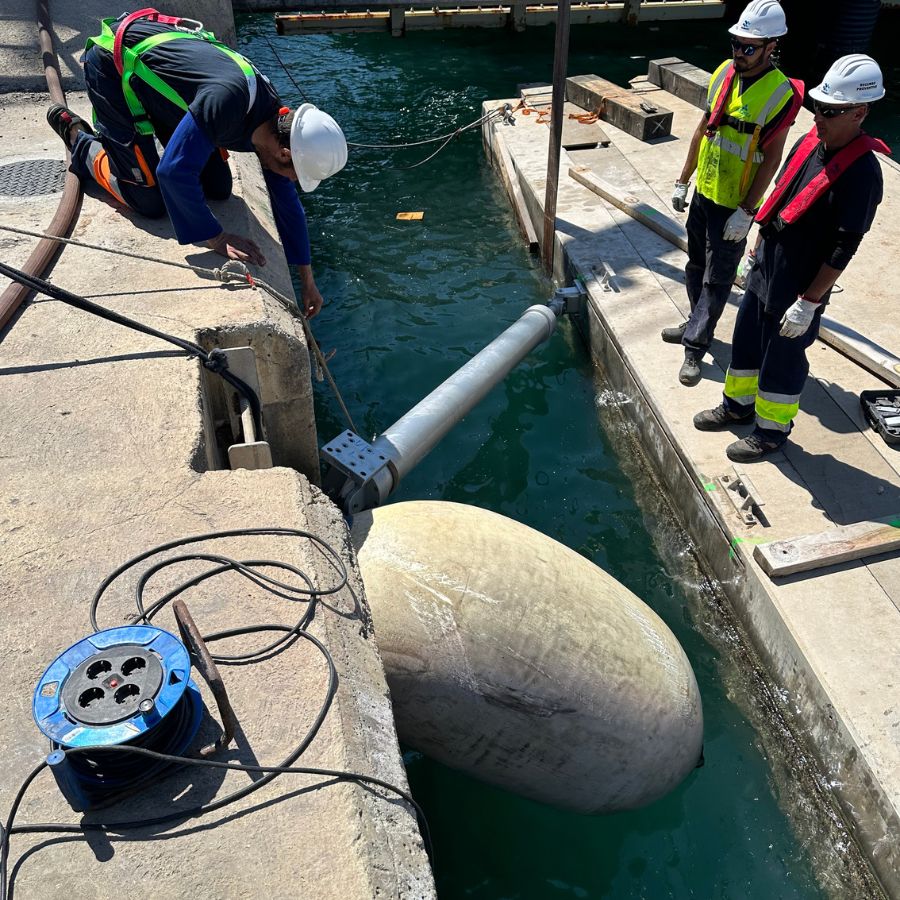
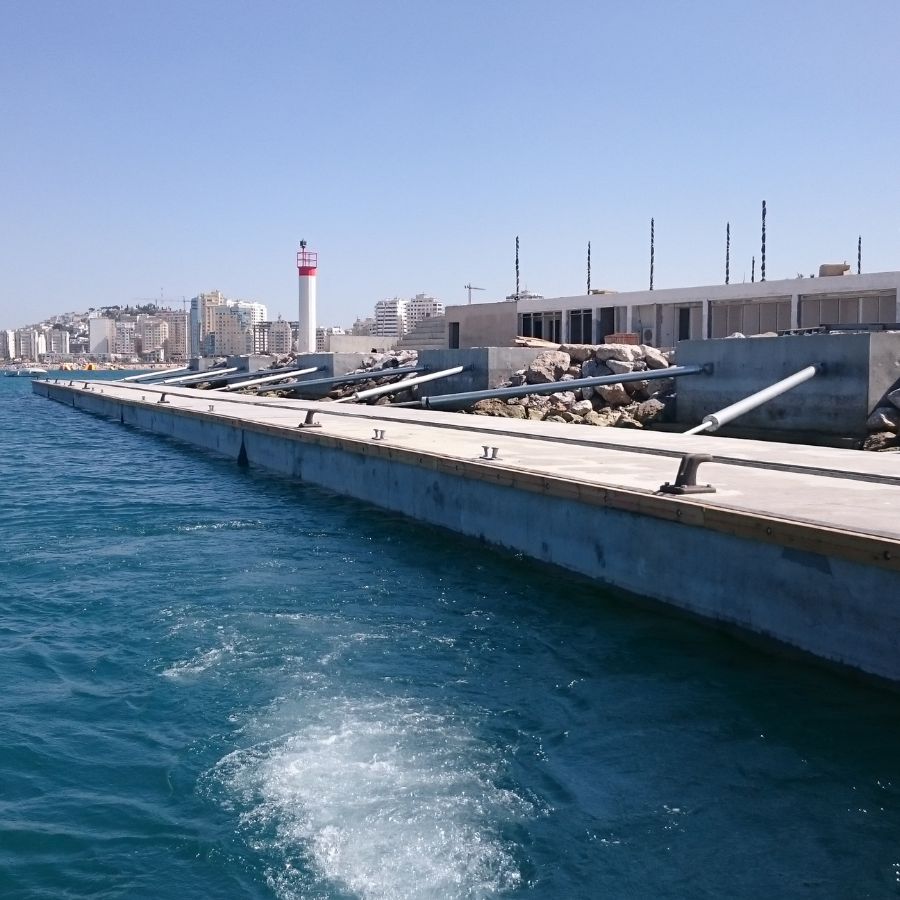
Damping arms are used to secure floating structures parallel to piers or breakwaters, replacing traditional systems with rigid mooring arms. This system allows for vertical movement of the floating structure in response to changes in water level, while also incorporating elastic behavior that dampens both compressive and tensile forces.
Shock Absorber Cranks

Main function

To guide and dampen the movement of floating structures moored parallel to a fixed structure when it is not feasible to install anchors or piles.

Damping tie rods are connecting elements designed to secure and guide floating structures parallel to fixed infrastructure such as piers, breakwaters, or jetties. Their primary function is to absorb and control the forces generated by waves and vessel mooring maneuvers, thereby reducing the direct transmission of loads to the floating structure and the mooring points.

The system keeps the floating dock or platform aligned with the fixed structure, ensuring operational stability and controlled behavior under dynamic loads. At the same time, the connecting rods allow for the vertical movement needed to accommodate changes in water level, ensuring the facility operates properly under tidal conditions or hydraulic fluctuations.
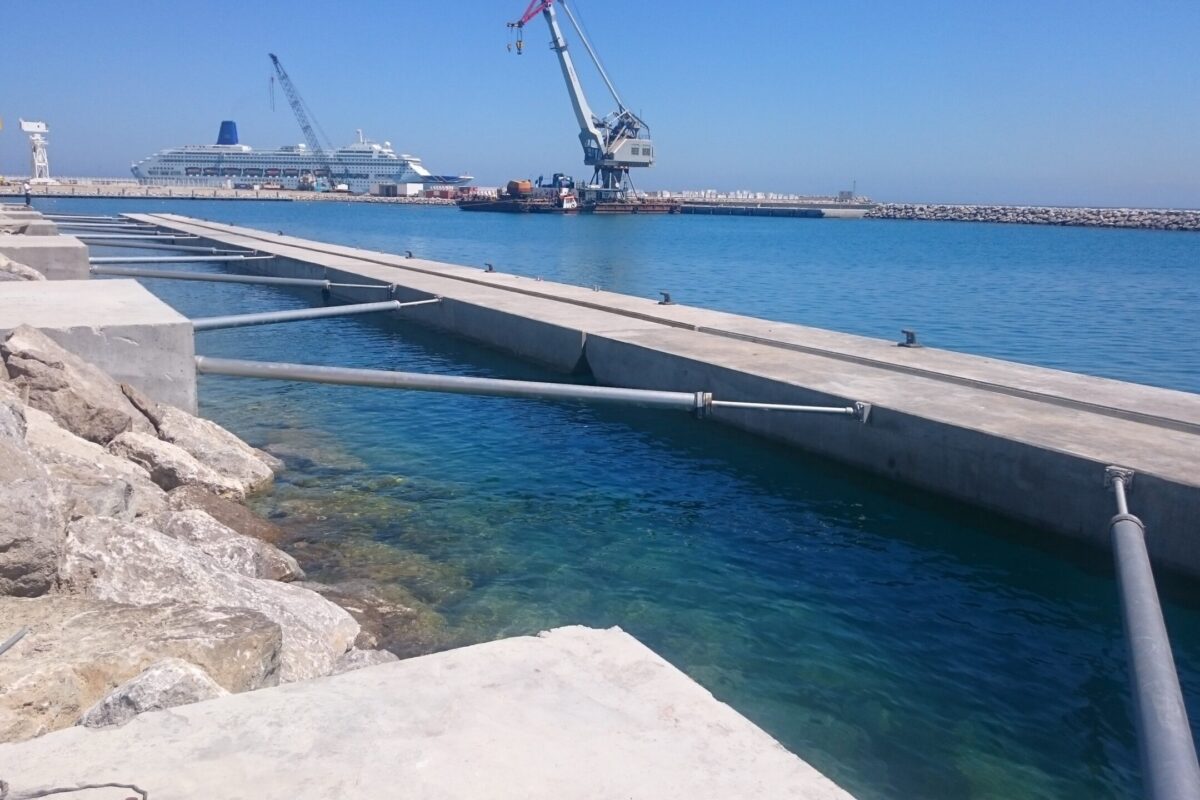
Damping cranks are primarily used in situations where it is necessary to keep a floating structure aligned parallel to a fixed structure, especially when it is not feasible to install piles or conventional mooring systems.

Common applications:

  • Anchoring parallel pontoons to piers or breakwaters
  • Adaptation of existing breakwaters as berthing lines
  • Mooring of service or work boats
  • Auxiliary floating platforms at port facilities

The implementation of systems using damped links requires a fixed structure capable of absorbing the loads transmitted by the system.

The main design criteria include:

  • Geometry and distance between the fixed and floating structures
  • Wave intensity and anticipated operational loads
  • Changes in water level
  • Types of vessels that will use the facility

Each system must be specifically sized according to the operating conditions and the expected performance of the infrastructure.

  • Attenuation of forces transmitted by waves and docking maneuvers
  • Reduction of loads on the floating structure
  • Allows for vertical movement due to changes in water level
  • Functional use of existing breakwaters as mooring lines
  • A robust, low-maintenance system

Request a technical study of shock-absorbing connecting rods