Controlled mooring for floating structures

Elastic Anchors

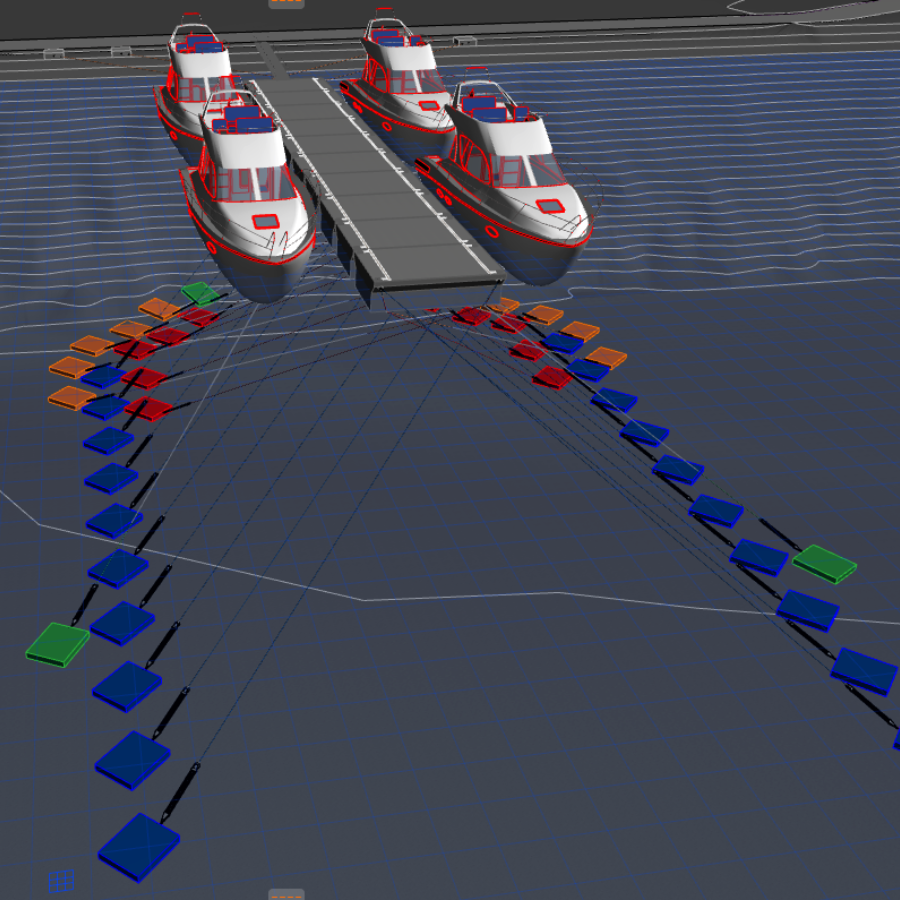
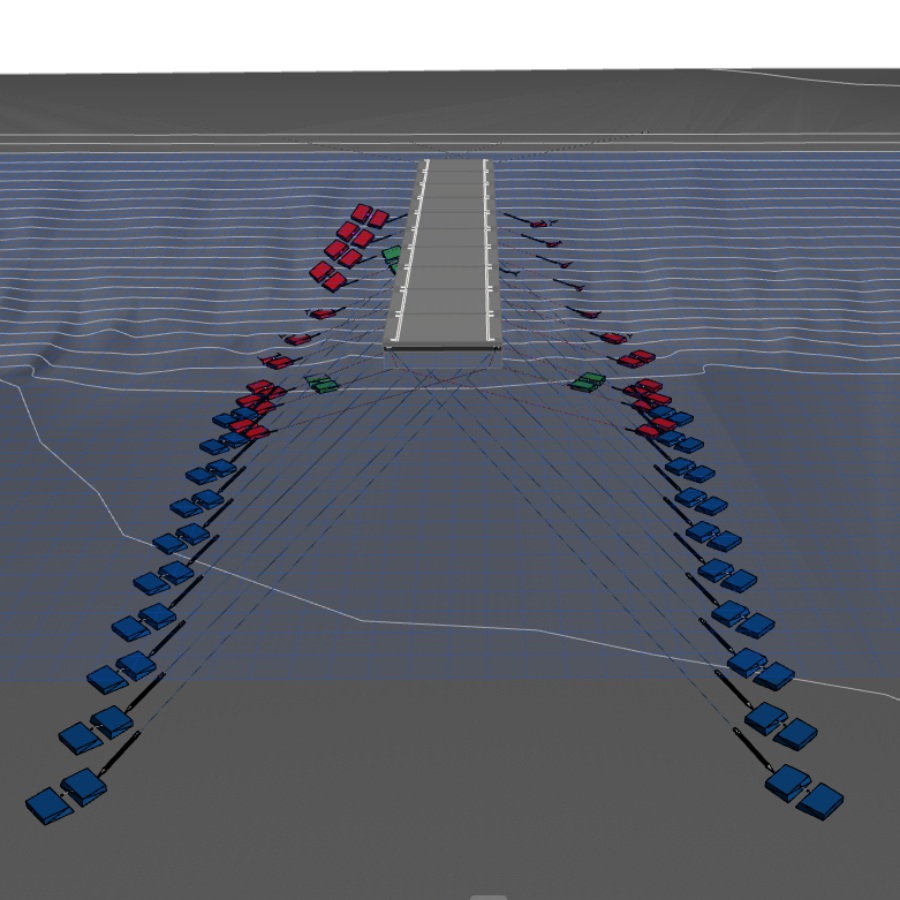
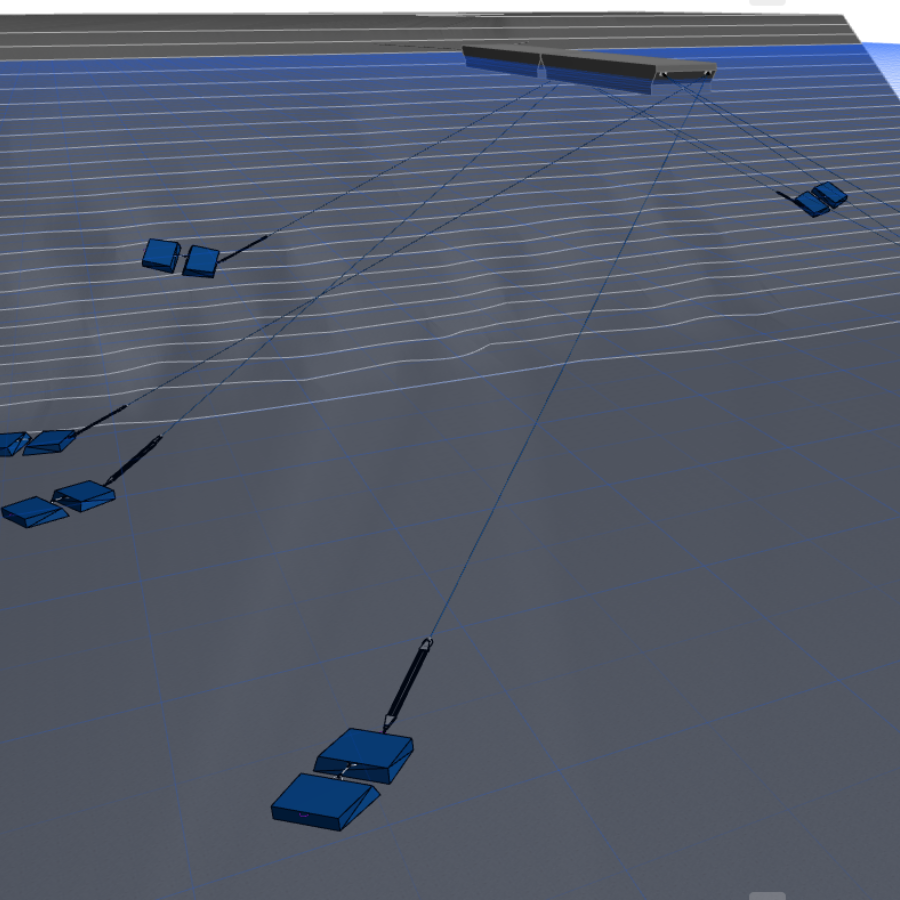
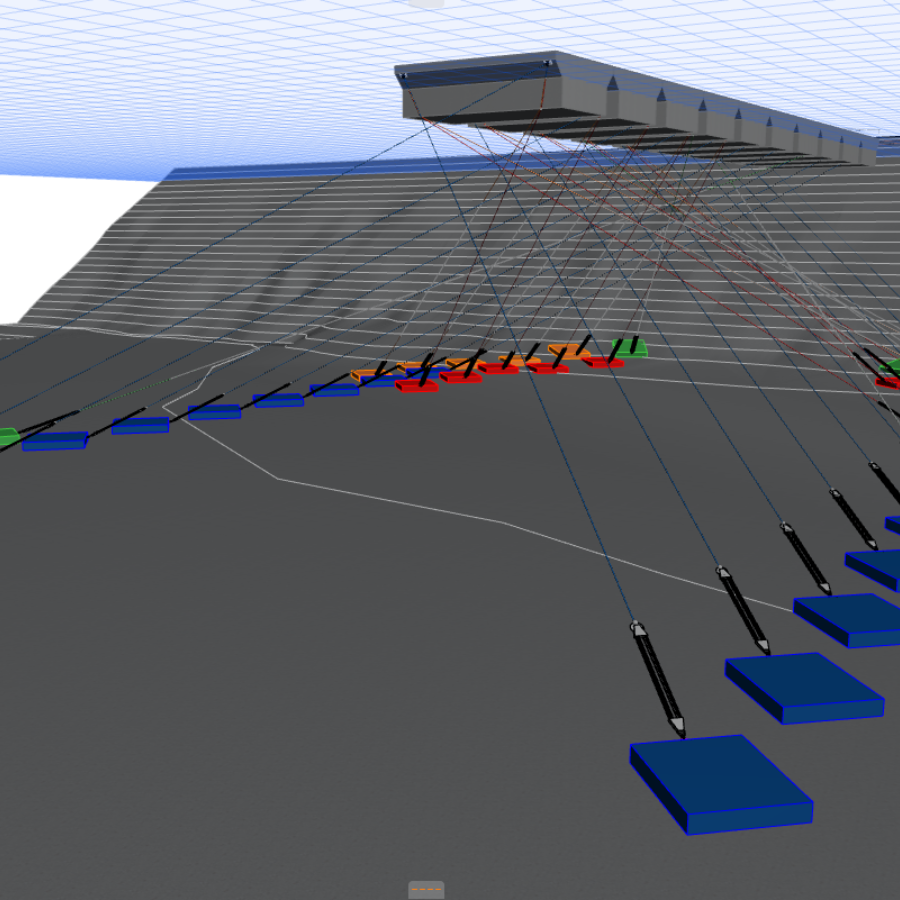
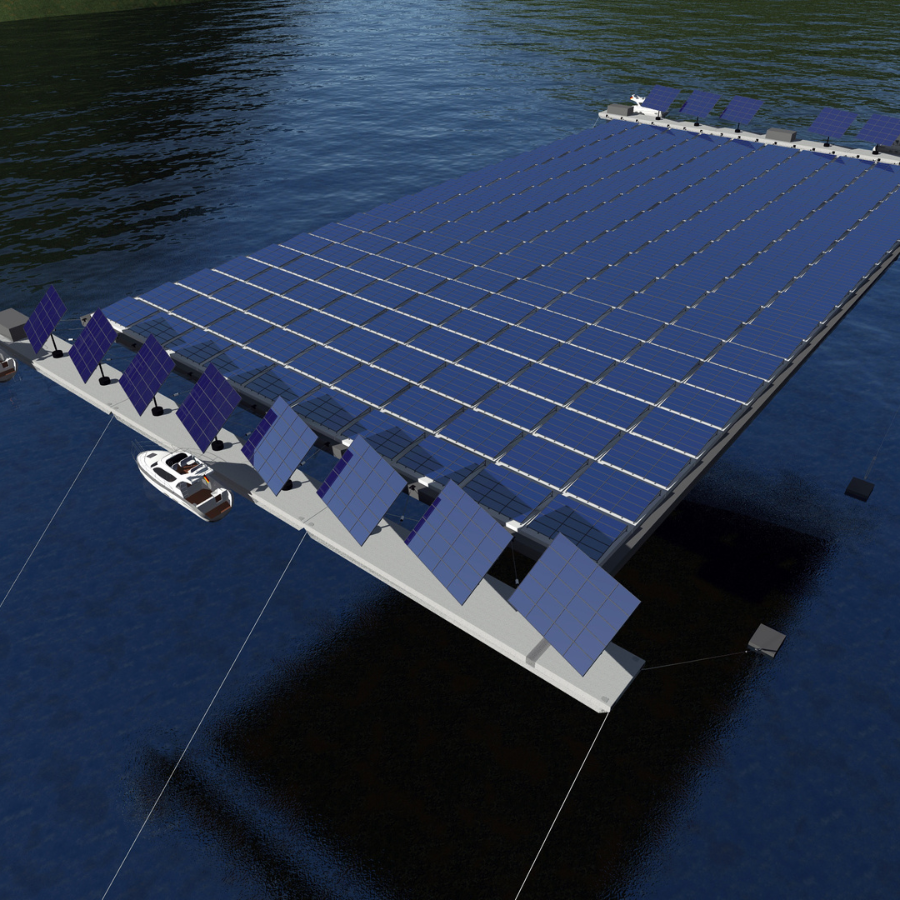
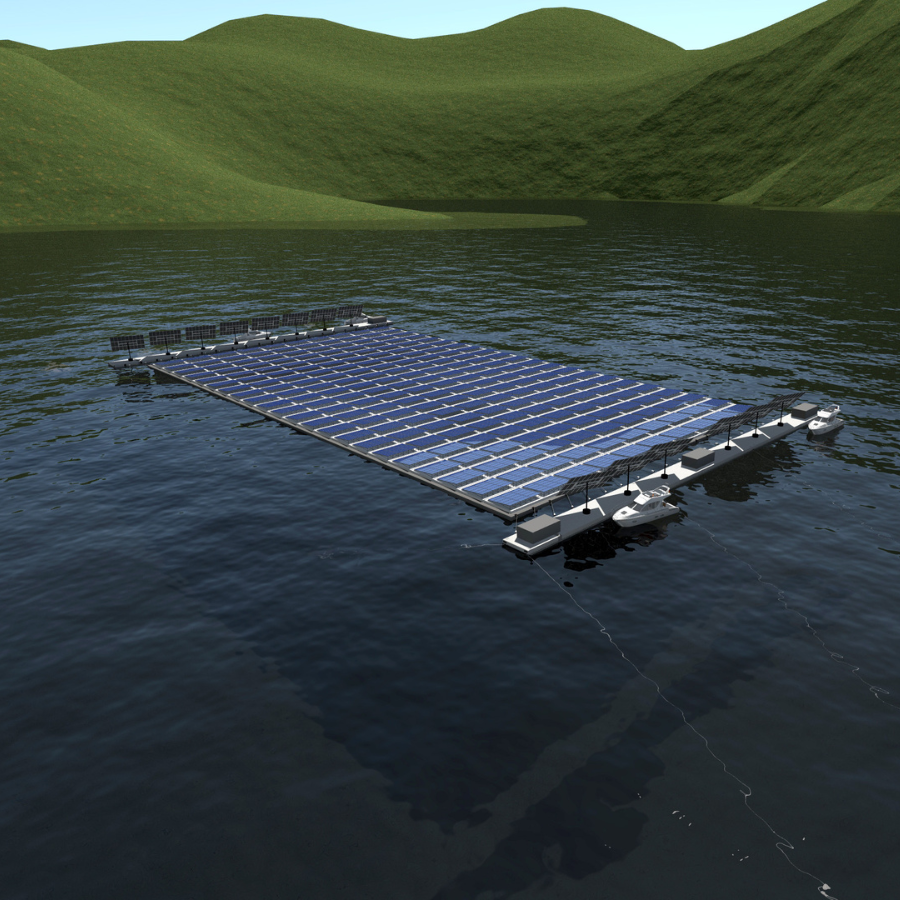
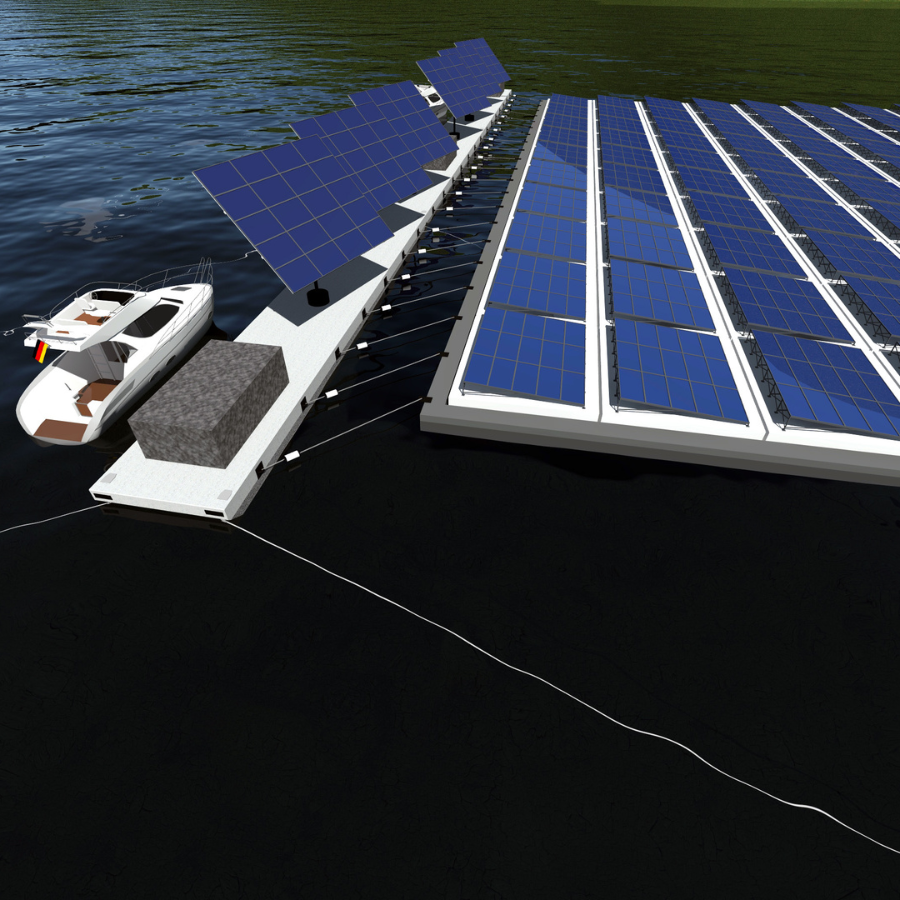
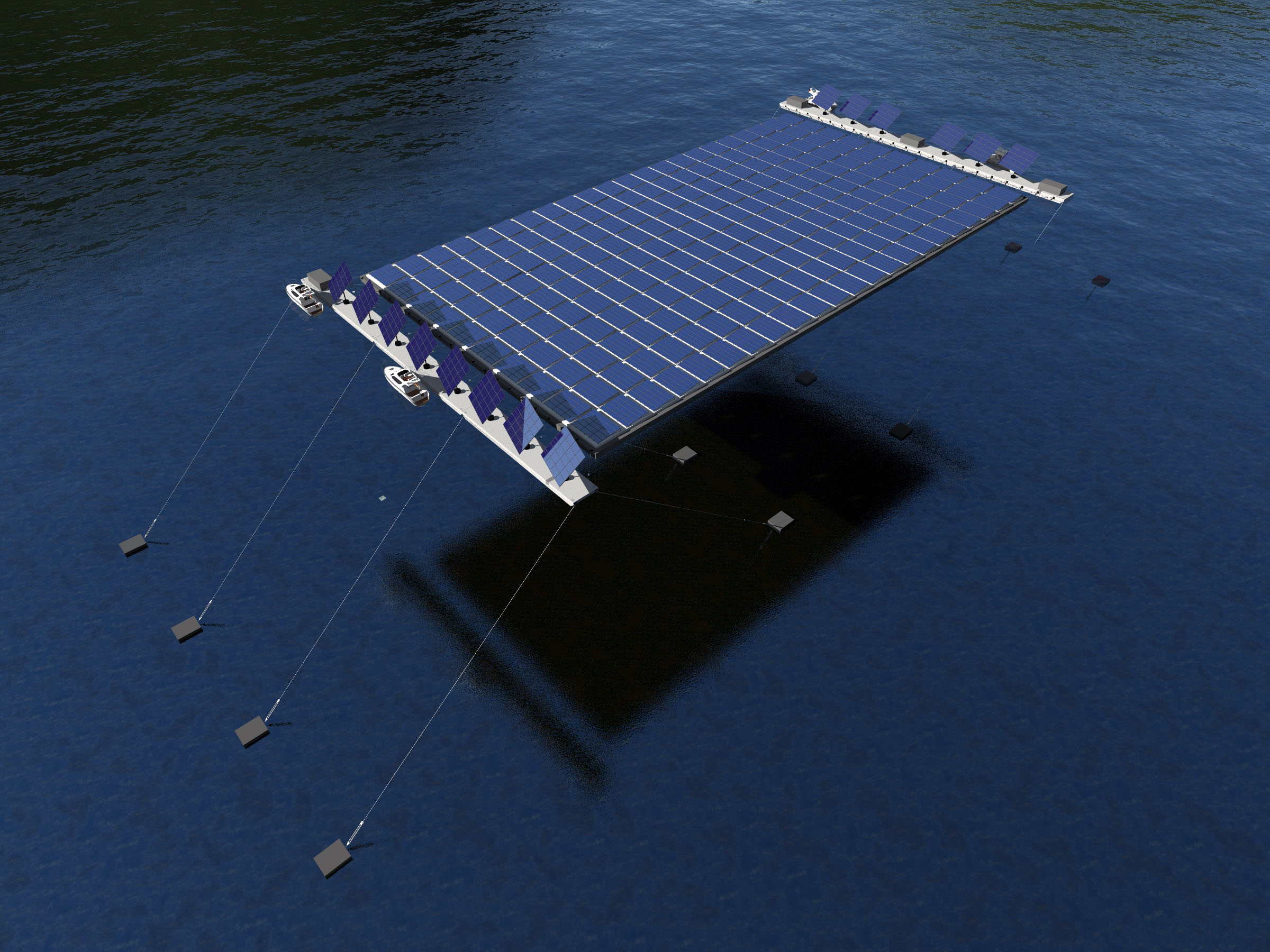
Elastic mooring systems are used to secure floating structures such as jetties or breakwaters, replacing the traditional system based on chains and catenaries. Unlike these systems, elastic mooring works by using a straight mooring line consisting of an elastic element and a rope, allowing it to absorb movements caused by waves and changes in water level in a controlled manner.

This type of solution makes it possible to track the anchor line's path at all times and adjust the system's behavior based on the expected site conditions.

Controlled mooring for floating structures: Elastic Mooring Systems

Main function

To keep floating structures in position using a flexible system that absorbs and dissipates the forces generated by waves, wind, and changes in water level.

The elastic mooring system is designed to absorb, in a controlled manner, the dynamic loads generated by the marine environment, without relying on the weight and deformation of a long mooring line under catenary tension.

Thanks to its elastic behavior, it significantly reduces the load peaks transmitted to the floating structure and improves the system’s response to waves, wind, and currents. This results in a more efficient system with less wear and greater operational stability.

In addition, the shorter required length of the mooring lines allows for more efficient use of the water area and simplifies installation, which can be carried out using underwater methods without the need for large auxiliary equipment.
  • Mooring of floating docks in marinas and harbors.
  • Installation of floating breakwaters in sheltered or semi-exposed areas.
  • Floating structures in port, industrial, or reservoir settings.

  • Requires anchors or mooring lines suitable for the seabed
  • It must be sized according to the expected range of water level and wave height
  • Allows for submersible installation without the need for floating cranes or barges

  • Reduction of the maximum stresses transmitted to the structure, thereby improving its durability.
  • Less space required in the water surface compared to traditional overhead catenary systems.
  • Adjustable performance based on wave conditions, tide, and usage.
  • Greater efficiency in absorbing dynamic loads.
  • Easier to install, lightweight, and adaptable to different environments.

Request a technical study on elastic moorings