Recent regulatory changes regarding fuel tanks at port facilities have reignited a significant debate within the maritime sector:how to ensure environmental and operational safety without limiting the flexibility of port infrastructure.
Various industry publications, such as the analysis published in IBINews on the new regulations affecting fuel storage systems at marinas, point to a scenario in which traditional infrastructure may be forced to undergo significant technical upgrades.
A more stringent regulatory environment
Environmental regulations related to the storage of hydrocarbons are evolving rapidly. The goal is clear:
- reduce the risk of contamination
- improve containment systems
- improve facility security
However, these new requirements may entailsignificant adaptation costs for many marinas, especially those with inflexible infrastructure that was installed decades ago.
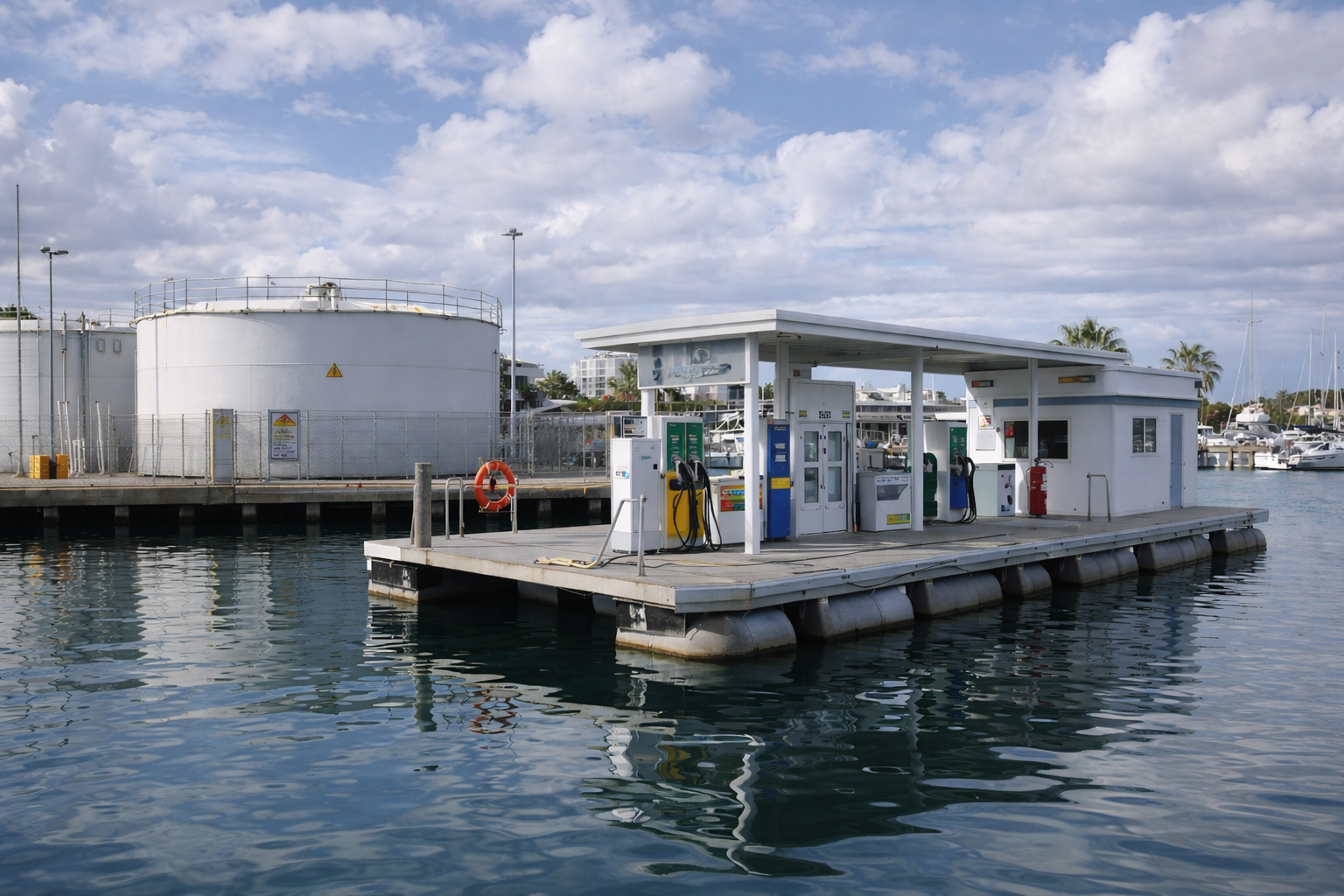
Floating service stations: a flexible alternative
For years, at MSI we have maintained thatfloating gas stations represent a solution that is particularly well-suited to this new regulatory landscape.
The main advantages are clear:
- Physical separation of the storage system from the port's fixed infrastructure
- Easier to upgrade technology
- Less disruption during service or maintenance
- Flexibility to adapt the installation to regulatory changes
In addition, floating platforms make it easier to integrate modern safety, monitoring, and environmental containment systems than many existing onshore facilities.
Adapting the port to a changing environment
Yacht clubs and marinas operate in an increasingly complex environment, where they must balance:
- environmental sustainability
- operational safety
- cost-effectiveness
- user experience
In this context,marine engineering must prioritize adaptable and resilient solutions that can evolve in line with regulations and the industry’s needs.
Looking to the future
The new regulations should not be viewed merely as a technical requirement. They can also serveas an opportunity to modernize infrastructure and improve its long-term performance.
The key lies in designing solutions that combine sound engineering, sustainability, and operational flexibility.
In this regard, floating infrastructure will continue to play an increasingly important role in the development of marinas in the future.